Honoring Julius Rosenwald was part of my upbringing in northeastern North Carolina.
From the early 1960s, my father and teachers taught me about the importance of Rosenwald. They passed on stories of the schoolhouses that were built due to his funding and direction, including Brown Hall, the six-room school where I attended class for four years. My father remembered the time in 1926, when our farmers donated their time, carts, and mules to carry the school’s building materials from the train station. He and my aunts all walked across Brown Hall’s stage when they graduated.
In 1986, Brown Hall was restored and became the home of the C.S. Brown Regional Cultural Arts Center and Museum. In 2022, my organization, the Chowan Discovery Group, received a grant to replace two of Brown Hall’s four Tuscan columns. Chowan Discovery also received a National Trust for Historic Preservation Trust grant to fund a documentary about Brown Hall, which helped with fundraising for further restoration.
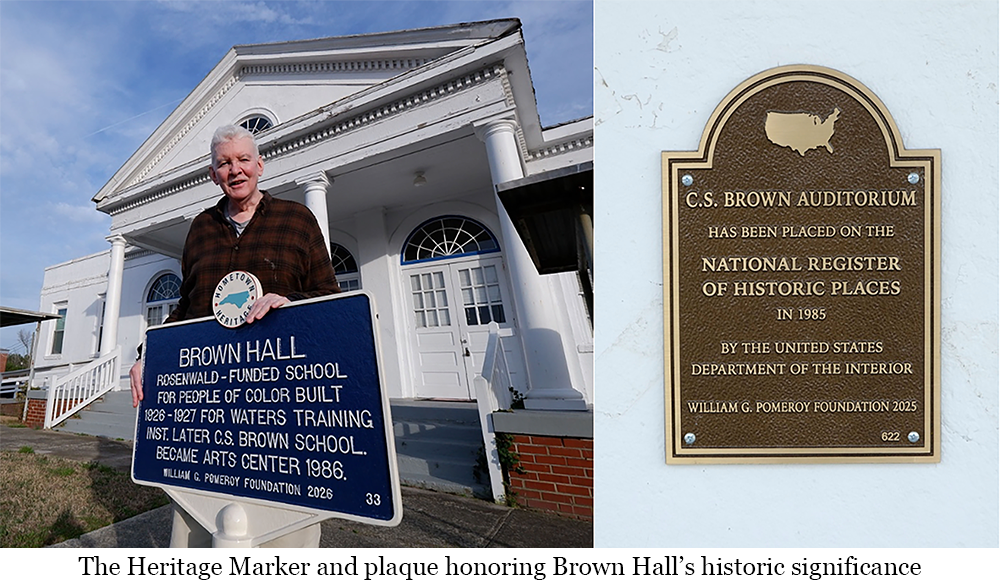
In honor of Brown Hall’s centennial this year, I installed a plaque denoting the hall’s inclusion on the National Register of Historic Places (NRHP), funded by the William G. Pomeroy Foundation, as well as a Pomeroy Hometown Heritage Marker.
My church, Pleasant Plains Baptist, also has a 1920 Rosenwald schoolhouse on the grounds, in which Rosenwald’s portrait still hangs. When the school closed in 1950, the county sold it to the church for $1, since the church owned the land on which the schoolhouse stood. Pleasant Plains Church members quickly set about installing electricity, water, heating, a kitchen, bathrooms, and playground equipment. The schoolhouse became the church’s community center.
In 2016, I placed the Pleasant Plains Schoolhouse on the National Register of Historic Places. The church has completed repairs and is close to finishing the restoration of the schoolhouse. Recently, we mounted a historical marker for the school, and I plan to add a NRHP plaque at the schoolhouse door, also funded by the William G. Pomeroy Foundation.
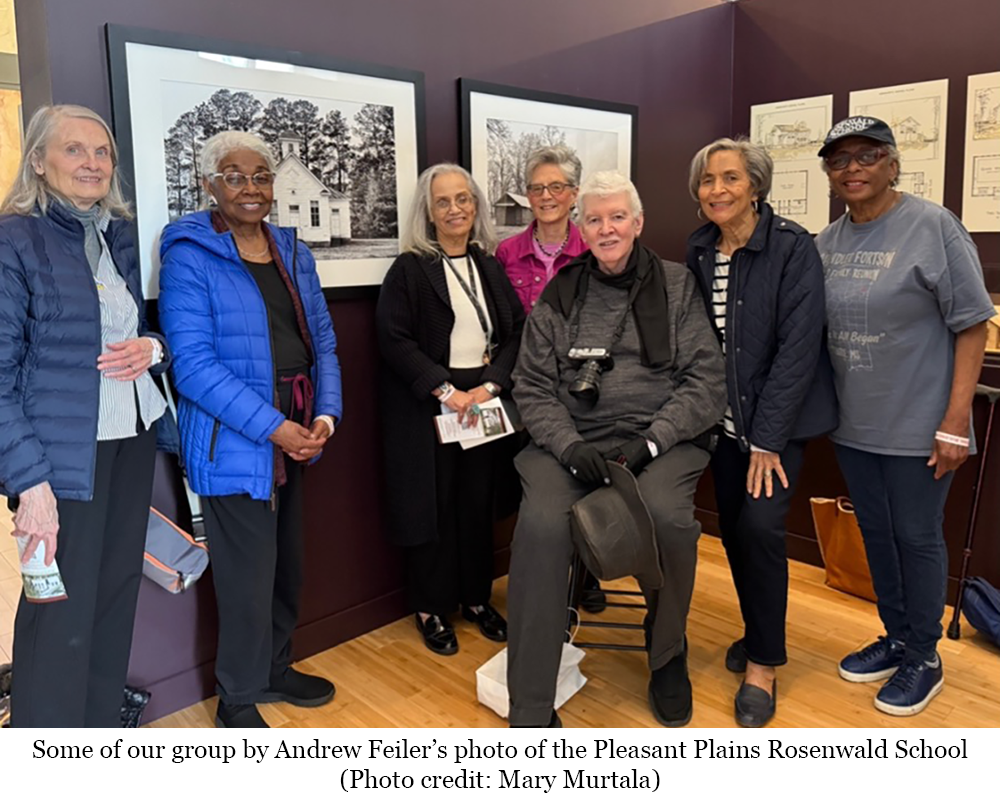
When I toured the Rosenwald Schools exhibition at the National Building Museum led by Rosenwald Park Campaign President Dorothy Canter on May 2, I was delighted to see the Pleasant Plains School featured. With the help of the Pearl Project, the Afro American Historical and Genealogical Society, and the Exposure Group of African American Photographers, the tour attracted thirty attendees.
Restoring these schools honors both the communities and Rosenwald’s efforts to advance education and community, and I hope other communities will replicate the effort. Most of schools no longer exist, but even when we can’t preserve the buildings, we can preserve the stories and put up historic markers. Through attending events and conferences for Rosenwald Schools, I’ve encountered more of the remarkable people who are keeping these stories alive. Those relationships have led to more connections and opportunities to apply for historic markers for other schoolhouses across the state.
The markers tell a physical story tied to the places where these stories took place. To me, this work is about more than buildings—it’s about the people. It’s an honor to bring out stories of remarkable people who have been forgotten in my region.
—Marvin Tupper Jones
Marvin is the founder and director of the Chowan Discovery Group whose mission is to research, document, preserve and present histories primarily in northeastern North Carolina’s Hertford County.