“My desire to do this work is first of all to acquaint all who see it with the hidden possibilities of women.” - Mildred Blount, 1943 Rosenwald Fellow (Fashion Design)
Women, the Arts, and the Rosenwald Fund
Across the 20-year span of the Fellowship Program, the Rosenwald Fund elevated women who made a significant impact in the world across a wide variety of fields. The arts were especially shaped by their fellowships and careers, and three women in particular—each connected by Rosenwald—represent the timeline of the Rosenwald Fund Fellowship Program and its lasting impacts on art, society, and women’s history.
Augusta Savage – Fine Arts/Sculpture
In the first full year that the Rosenwald Fund awarded Fellowships, sculptor Augusta Savage became one of the early examples of the potential and opportunity these Fellowships presented.
Born Augusta Christine Fells in Jacksonville, Florida, in 1892, Savage showed early aptitude for sculpture, despite her father’s intense religious opposition to art. She began taking art commissions in 1919 after winning an award at the Palm Beach County Fair. She arrived in New York in 1921 with $4.60 to her name and was awarded a scholarship to the Cooper Union school ahead of 142 men on the waiting list, where she completed a four-year degree in only three years.
Between 1923 and 1924, in the year surrounding her graduation, Savage married and lost her third husband, was accepted to and then rejected from a summer art program in France when they discovered she was Black, attracted the attention of a violent stalker, and became the caretaker of her family when they moved into her New York apartment after their home was destroyed by a hurricane and her father was paralyzed by a stroke.
Within that same span of time, Savage was also commissioned by the New York Public Library to sculpt a bust of Rosenwald Fellow W.E.B. DuBois, which rapidly led to more commissions that were praised for her trademark “humane, neutral” portrayals of African Americans. She became an outspoken critic of the low standards many white patrons expected for African American art.
In 1929, Savage became one of the first people to be offered a Rosenwald Fellowship in the Fine Arts. She used her Fellowship—along with support from other foundations and teachers—to finally study in Paris, where her art was displayed at the Grand Palais and won two awards. One of the first pieces created during her Fellowship, a plaster bust called Gamin, is now displayed at the Smithsonian American Art Museum.
Savage eventually returned to New York, where she became a prominent figure in the Harlem Renaissance and taught anyone with an interest in art, including Rosenwald Fellows Jacob Lawrence and Kenneth B. Clark, as well as Norman Lewis and Gwendolyn Knight.
Ten years after her first Rosenwald Fellowship, Savage became one of only four women (and only two African Americans) to be included in the 1939 New York World’s Fair, where five million people saw her create Lift Every Voice and Sing (or, The Harp). The statue was inspired by the song by James Weldon Johnson, the very first Rosenwald Fellow, and highlighted the impact African Americans have had on music. Unfortunately, Savage did not have the funds to cast the piece, so it was destroyed at the end of the fair.
Lillian Smith – Creative Writing
Also in 1939, another Florida-born woman received a Rosenwald Fund Fellowship for Creative Writing exactly halfway through the Fellowship Program’s life.
Lillian Smith, best known for her 1944 novel Strange Fruit, was a white woman who took outspoken positions in favor of race and gender equality in a time when it was not only unpopular, but dangerous to do so.
Smith became financially independent early in her adulthood and pursued music and teaching. During her time as an educator in China, she became aware of the similarities in racism and oppression between Chinese culture and the culture she’d grown up with in the American South.
She returned to the United States in 1925 and took over running the Laurel Falls Camp for Girls in Georgia, which her parents had opened a few years earlier. During her tenure, the camp became well-known as an innovative learning center, especially for the arts and modern psychology. She also used her position to discuss the issues of segregation and equal rights with the campers, mentoring girls on how to improve society for themselves, other women, and all Americans.
Smith also took up writing fiction, in which many of her characters represented suppressed peoples and were involved in forbidden or illegal relationships, both interracial and homosexual.
Strange Fruit was the product of her Fellowship and depicted a biracial couple in the South. Smith described it as being about the “damaged, twisted people (both black and white) who are the products or results of our racist culture.” It was immediately banned in many cities and was not allowed to be mailed through the US Postal Service. Eleanor Roosevelt asked her husband to lift the mail ban later that year, but the novel remained banned in Boston until 1990.
Smith believed that the lives of all Americans depended on the integration of society, and her advocacy and authentic representations contributed to dismantling the Jim Crow laws and promoting equal rights for all. In 1999, Lillian Smith was posthumously awarded the Georgia Women of Achievement Award.
Pearl Primus – Dance/Anthropology
In 1948, midway through Smith’s publishing career, the Rosenwald Fund awarded its final Fellowship to Pearl Primus, a sensational dancer, choreographer, and anthropologist.
Born in Trinidad and raised in New York City, Pearl Primus studied biology and pre-medical science at a graduate level before realizing that she would be unable to work in the field as a Black woman. Without funding or opportunity to complete her studies, Primus took odd jobs, eventually landing backstage at a dance company, where she discovered an innate talent for movement.
Within a year, Primus became the first Black student of the New Dance Group, and she rapidly gained technique and exposure to art as a form of activism. She began to study African culture and heritage, research that inspired her first major solo piece: African Ceremonial. The piece received significant praise and led to performances at integrated night clubs, Carnegie Hall, and the 1943 Negro Freedom Rally in Madison Square Garden.
Primus decided to spend the summer of 1944 immersed in the lives of impoverished Black sharecroppers of the Deep South to study African American culture. Her time picking cotton, attending churches, and engaging with a suffering people shaped her choreography and led to her subverting expectations attached to typical dance movements, such as using leaps and jumps to convey anger and defiance rather than joy.
That fall, Primus returned to New York and made her Broadway debut with a piece she choreographed to former Rosenwald Fellow Langston Hughes’ poem The Negro Speaks of Rivers.
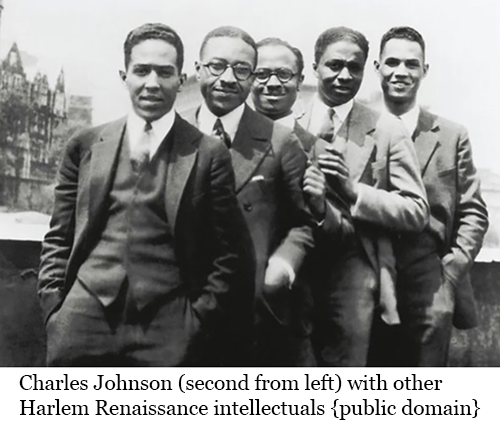
Her career took off, and by 1947, she was well-known in the industry for portraying challenging subjects in her choreography. She went on tour with her own dance company in 1948, and former Rosenwald Fellow (and member of the Fellowship selection committee) Charles S. Johnson saw her perform at Fisk University. He was so impressed with her interpretations of African dance that he could not believe she’d never visited Africa.
That year, Pearl Primus became the very last recipient of a Rosenwald Fund Fellowship and was awarded more money than anyone who had come before her. She set off for Africa and became so thoroughly integrated in local culture that she was initiated into their societies and even given a Nigerian name. As she traveled through western and central Africa, she was declared a man so that she could be given access to dances reserved only for men.
For the next 30 years, Primus staged those traditional dances in shorter and more dramatic pieces. She never stopped learning, earning her PhD in Anthropology from New York University in 1978, and she passed on her knowledge through the Pearl Primus Dance Language Institute.
Primus is widely recognized as one of the most influential pioneers of African dance, having captured many of their traditions and movements in her meticulous research notes and her own moving performances. Her legacy is remembered as one of unity and cultural honor, as much of her work prioritized cross-cultural connections and authentic expression of African and African American experiences. In 1991, she was awarded the National Medal of the Arts, one of many awards she received across the globe during her lifetime.
In a biography written by Murray & Peggy Schwartz, Primus is quoted saying, “Dance has been my language, my strength...I have confided my most secret thoughts and the inner music of all mankind... I dance not to entertain but to help people better understand each other.”
As the last Rosenwald Fund Fellow, she also represents the incredible success of the 20-year program in fueling the careers of scholars and artists. The Fund, which had been established “for the well-being of all mankind,” was sunset after Primus’ extraordinary fellowship, during which she—and many of the women before her—truly did advance the well-being of people across not only the country, but the world.